Table Of Content

It fired a total of 28 cruise missiles, in addition to its 16-inch deck guns. The exact guidance system and navigational dynamics of the Tomahawk missile are classified. However, it is known that it can use GPS or inertial guidance systems to hit the target. Navy states that up to 15 targets can be pre-programmed for missile salvos. The Tomahawk is capable of "loitering," meaning that, provided the missile has enough fuel, it can fly around in circles to relay information or wait for the right target. It has a range of around 1,500 miles, meaning that the ship or submarine launching the missile is well out of harm's way.
Efficiency in modern warfare
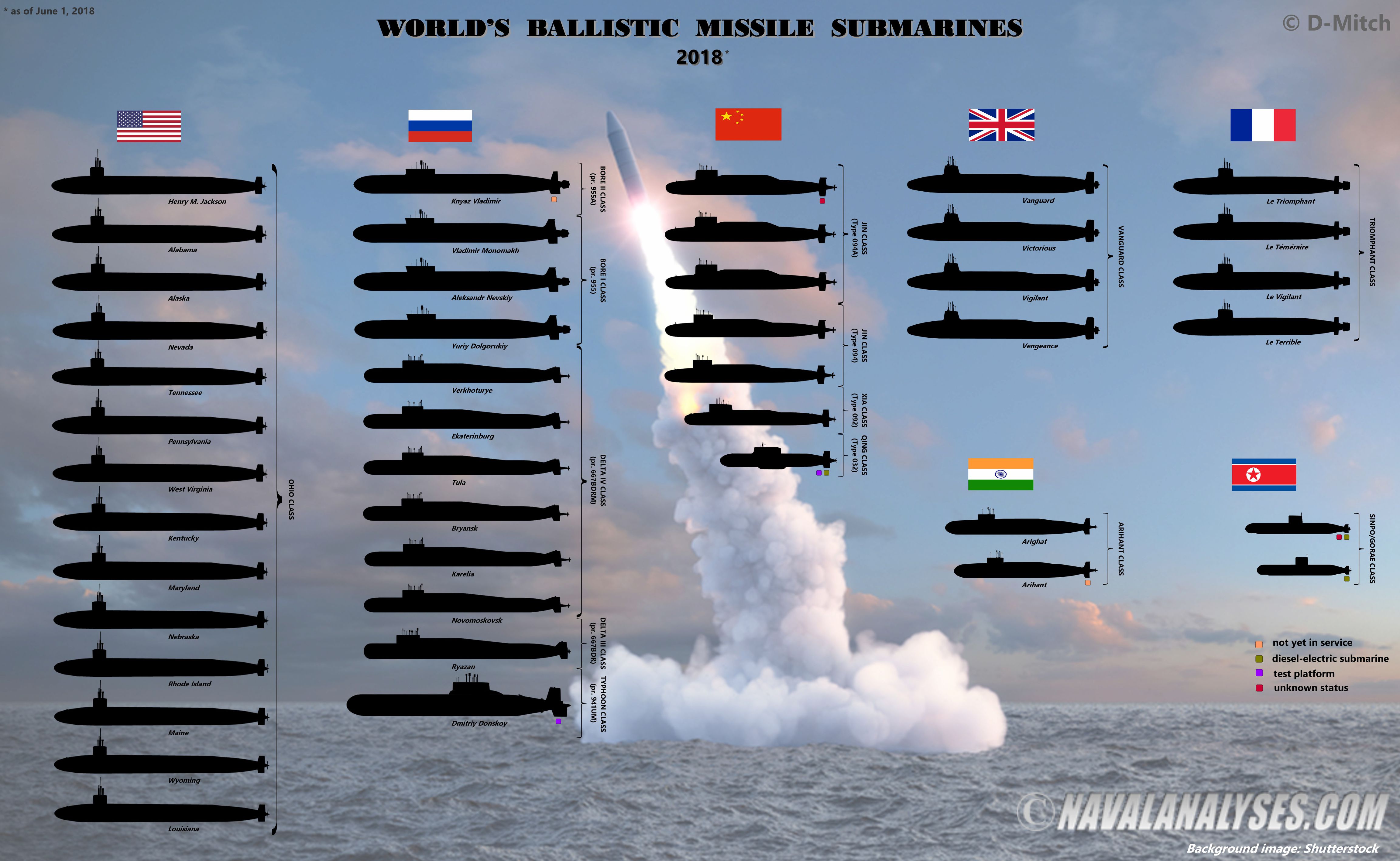
The most common mission for cruise missiles is to attack relatively high-value targets such as ships, command bunkers, bridges and dams.[52] Modern guidance systems permit accurate attacks. Some missiles can be fitted with any of a variety of navigation systems (Inertial navigation, TERCOM, or satellite navigation). Larger cruise missiles can carry either a conventional or a nuclear warhead, while smaller ones carry only conventional warheads. Cruise missiles can be categorized by payload/warhead size, speed, range, and launch platform.
Programs & Projects
Work will be executed in various locations across the US until February 2023. RGM / UGM-109E Tomahawk (Block IV TLAM-E) is the latest member in the Tomahawk missile family. RGM / UGM-109C (Block III TLAM-C) is a conventional unitary variant, carrying a 1,000lb-class warhead. RGM / UGM-109D (Block III TLAM-D) is a submunitions dispenser variant armed with 166 combined-effects bomblets.
Royal Canadian Navy
North Korea is known to possess large quantities of nerve agents, as well as other various types of chemical weapons. VX Nerve gas is one of the most lethal agents, causing death within minutes. A missile loaded with a VX Nerve gas payload would be devastating to a urban high-density population.
While analysis of these adverse cost exchange ratios is a tempting and sometimes useful framework, it obscures both the complexity of air and missile defense engagements and the complicated value of air and missile defense. Most missiles are designed to sprint to their targets; Tomahawk is designed to run a marathon. Engineers chose a liquid fuel-sipping turbojet engine because it enabled greater range than a rocket engine of roughly the same size. A slower speed also makes low altitude flight more viable, which in turn makes the missile much more difficult to detect by radar. Today, most advanced countries operate similar low-flying subsonic missiles, including Russia, China, France, and South Korea.
Media Services
Forbes estimates Jan. 2 mass attack cost Russia nearly $620 million - Yahoo News
Forbes estimates Jan. 2 mass attack cost Russia nearly $620 million.
Posted: Tue, 02 Jan 2024 08:00:00 GMT [source]
The main advantages were speed (although not sufficient to outperform contemporary propeller-driven interceptors) and expendability. Bomber-launched variants of the V-1 saw limited operational service near the end of the war, with the pioneering V-1's design reverse-engineered by the Americans as the Republic-Ford JB-2 cruise missile. While ballistic missiles were the preferred weapons for land targets, heavy nuclear and conventional weapon tipped cruise missiles were seen by the USSR as a primary weapon to destroy United States naval carrier battle groups.
In just the last couple of years, the fleet has fired more than 100 Tomahawks at targets in Syria. The result would be a much more capable, but potentially much smaller, U.S. cruise-missile arsenal. The US Navy awarded a $251m contract to Raytheon for the production and delivery of Tomahawk Block IV missiles for both the US Navy and Royal Navy in September 2014.
Tomahawk launch platforms
If a 100kt tactical nuclear missile were to make a surface detonation in the middle of a city, all buildings, subterranean transit, and people would be destroyed in an approximate 2km range in all directions. This cost increases if power grids and water treatment/pump stations are within this 2km range. Medical costs would be severe for people within the thermal radiation range. Countries have been investigating the use for these low yield tactical nuclear missiles for precision strikes as alternative weapons in their arsenals. A nuclear missile with a 4km initial blast radius would require a yield of 18Mt, 3Mt larger than the largest US bomb tested, the “Castle Bravo”. Buildings would collapse up to a 12km radius with thermal radiation causing 3rd degree burns extending to a 36.8km radius from the initial point of detonation.
Air Force’s program to build a new fleet of nuclear air-launched cruise missiles (ALCMs) has risen to between $14.2 billion and $16.2 billion as the service begins the main development phase for the weapons. The purpose of this article is to provide an in-depth analysis of cruise missile costs. We will look at the variables that influence the cost of cruise missiles, examine different types available, and explore the cost of launching them.
With an eye to its potential cost and quantity, I asked if the Navy might consider MACE as an anti-ship munition as part of the magazine of future unmanned surface vessels like those now forming the Navy’s USV Division 1. However, at some point land targets (fixed and moving) and land-launch could be in the frame as well. Lockheed Martin, the Air Force and the Australian Army have already explored the possibility of using LRASM with a vehicle-mounted M142 High Mobility Artillery Rocket System (HIMARS). NAVAIR apparently desires a smaller form-factor for the weapon than the Harpoon or the LRASM, possibly sized similarly to the Raytheon RIM-174 (SM-6) anti-ship missile that the Navy conducted tests with on a Super Hornet in 2021.
A nuclear missile with a 2km initial blast radius would require a yield of 3.2Mt, the same yield as China’s Dong Feng-ICBM. Buildings would collapse up to a 6.76km radius with thermal radiation causing 3rd degree burns extending to a 17.7km radius from the initial point of detonation. The land attack variants, the 3M14T and 3M14K (NATO designation SS-N-30A), appear to lack the boost to Mach 3 on terminal approach. In compensation, the inertia-guided missiles have a range of between one thousand and 1,500 miles. A third class of Kalibr missiles—the 91RT and 91RE—is used to deploy antisubmarine torpedoes to ranges of around thirty miles. The Navy plans to replace its fleet of 14 Ohio-class ballistic missile submarines with 12 new subs.
By last Spring, Lockheed Martin had begun increasing automation and capacity at its LRASM/JASSM production line in Troy, Alabama. With demand at such a level for these $3 million-plus per unit missiles, a far cheaper MACE could potentially be ordered in the thousands per annum. To fill such orders, any company building MACE AURs (all-up rounds - missile/seeker/warhead) will have to have significant capacity. The updated cost projection is an increase of 30–50 percent from the Air Force’s earlier estimate of $10.8 billion for the program, known as the long-range standoff (LRSO) weapon, in 2016. (See ACT, September 2016.) Both the new and previous estimates include the impact of inflation.
We will also discuss the financial impact of cruise missile technology, including its potential benefits and risks. The cost of cruise missiles varies widely depending on the specific type and model. For example, the US Navy’s Tomahawk Block IV ALCM has an estimated unit cost of $1.41 million, while the Russian Kh-101 air-launched cruise missile has an estimated unit cost of $3 million. The Raytheon Tomahawk SLCM has an estimated unit cost of $2.9 million, while the Lockheed Martin AGM-158 JASSM-ER LACM has an estimated unit cost of $2.5 million. At the same time, the study also raises questions about whether adversaries would chose expensive land-attack cruise missiles (LACMs) rather than cheaper alternatives (such as existing ballistic missiles) to strike US territory.



No comments:
Post a Comment